
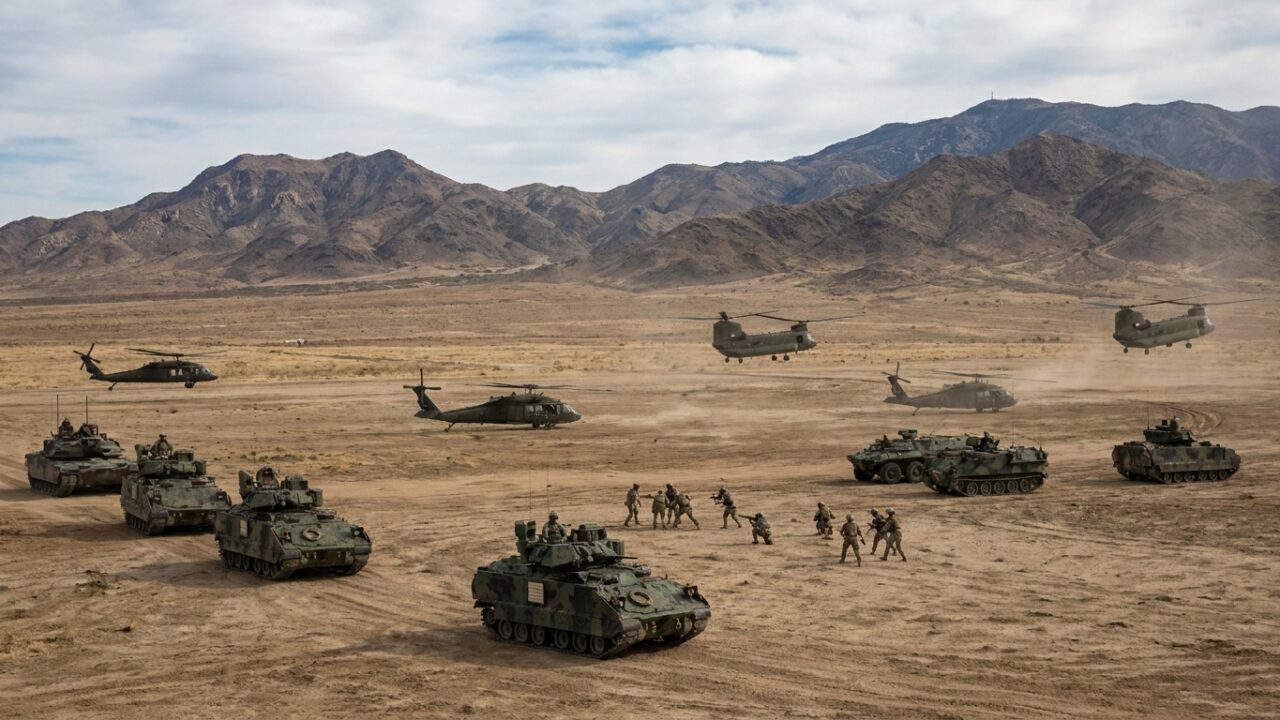
President Donald Trump announced Wednesday that the United States would reduce the scope of joint military exercises with South Korea, citing Seoul’s decision not to participate in recent military operations against Iran as a contributing factor to the policy shift.
The announcement marks a significant change in the longstanding security partnership between Washington and Seoul, which has conducted regular joint military drills for decades as a deterrent against North Korean aggression. Trump framed the decision as both a cost-saving measure and a response to what he characterized as insufficient burden-sharing by American allies.
Speaking to reporters at the White House, Trump suggested that countries benefiting from American military protection should contribute more actively to operations deemed important to US strategic interests. The remarks come amid broader questions about the future of American military commitments in the Indo-Pacific region and the evolving nature of traditional alliance structures.
Background on US-South Korea Military Cooperation
The United States maintains approximately 28,500 troops in South Korea, a presence dating back to the Korean War armistice in 1953. Joint military exercises between the two nations have traditionally served multiple purposes: maintaining combat readiness, demonstrating resolve to North Korea, and ensuring interoperability between American and South Korean forces.
These exercises have historically ranged from small-scale training activities to major field exercises involving tens of thousands of personnel, advanced weaponry, and strategic bomber flights. The exercises occur throughout the year but are typically most intensive during spring and late summer periods.
Previous administrations from both political parties have consistently emphasized the importance of these drills as central to regional stability and the defense of South Korea against potential North Korean aggression. The exercises have frequently drawn criticism from Pyongyang, which characterizes them as rehearsals for invasion.
Context of Recent Iran Operations
The decision comes in the aftermath of limited military strikes against Iranian targets, which the Trump administration characterized as necessary responses to Iranian actions in the region. While several traditional American allies participated in or supported these operations, South Korea opted not to contribute military assets or personnel.
South Korea’s position reflected concerns about escalating tensions in a region where it maintains significant economic interests, including substantial trade relationships and the presence of Korean nationals working in various Gulf countries. Seoul also faces its own regional security challenges that require maintaining focused military readiness on the Korean Peninsula.
The Trump administration had reportedly requested symbolic participation from key allies to demonstrate international support for the Iran operation, but Seoul declined, prioritizing its immediate security environment and seeking to avoid entanglement in Middle Eastern conflicts.
Details of the Announced Changes
While Trump announced the intention to scale back joint exercises, specific details about which drills would be reduced or eliminated remain unclear. Defense Department officials have not yet released a comprehensive statement outlining the concrete changes to the exercise schedule.
The reduction could potentially affect several categories of joint activities:
- Large-scale field training exercises that simulate combat scenarios
- Command post exercises focused on coordination between headquarters elements
- Combined air operations and strategic bomber missions
- Naval exercises in surrounding waters
- Special operations training and exchanges
Military analysts note that any significant reduction in training tempo could have implications for readiness levels, particularly given the complex coordination required between forces from two different nations with different languages, equipment systems, and operational procedures.
Reactions from Seoul and Regional Implications
South Korean officials have not yet issued a formal response to Trump’s announcement, though diplomatic sources suggest that the decision came without extensive prior consultation with Seoul. The timing of the announcement has raised questions about the consultative processes typically employed in alliance management.
The move occurs against a backdrop of ongoing questions about burden-sharing arrangements between the United States and South Korea. Negotiations over how much Seoul should pay to support the presence of American troops on Korean soil have been contentious, with Trump repeatedly arguing that South Korea should significantly increase its financial contributions.
Regional security experts express concern that reduced military exercises could send unintended signals to North Korea about American commitment to South Korean defense. Pyongyang has long sought to drive wedges between Washington and Seoul, and any perception of alliance weakening could embolden North Korean leader Kim Jong Un to take more aggressive actions.
Broader Alliance Questions
The announcement reflects broader tensions within the Trump administration’s approach to traditional American alliances. Trump has frequently criticized allies for what he describes as inadequate defense spending and insufficient support for American military operations around the world.
Similar tensions have emerged with NATO allies, Japan, and other partners that host American military bases or rely on American security guarantees. Trump has consistently argued that these arrangements constitute unfair burdens on American taxpayers and should be renegotiated to extract greater financial or military contributions from partner nations.
Critics of this approach argue that American alliances provide strategic benefits that extend beyond simple transactional calculations, including forward military positioning, intelligence sharing, diplomatic influence, and economic partnerships that benefit American interests.
What Remains Unclear
Significant questions remain about implementation of the announced policy. Pentagon officials have not confirmed a timeline for reducing exercises, nor have they specified which particular drills would be affected. The extent to which this decision was coordinated with military commanders responsible for Korean Peninsula operations remains uncertain.
Whether this represents a permanent shift in American defense posture or a negotiating tactic designed to pressure Seoul on burden-sharing payments also remains to be seen. Trump has previously announced policy changes regarding military exercises with South Korea, including a temporary suspension following his 2018 summit with Kim Jong Un, only to see some drills later resumed.
The reaction from Congress, where some members have expressed concerns about maintaining robust military readiness in the face of North Korean threats, will likely influence how extensively any exercise reductions are actually implemented. Key questions about alliance management, regional deterrence, and the precedent for linking allied contributions to specific operational decisions will continue to shape debate around this announcement in coming weeks.
