
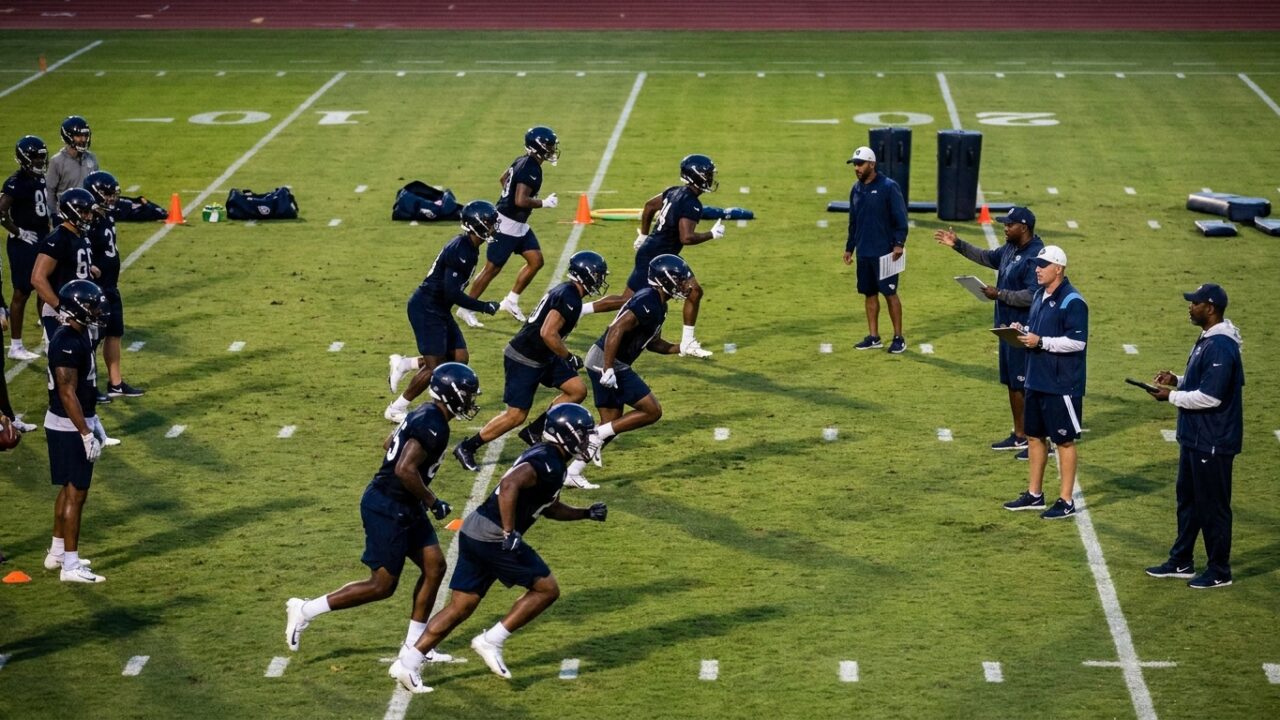
The Pittsburgh Steelers’ second preseason encounter against the New York Jets has crystallized the competitive landscape as the franchise approaches critical roster decisions. With final cuts looming before the regular season opener, individual performances during this exhibition game have significantly altered the trajectory of several players’ campaigns to secure their positions.
Preseason games serve as crucial evaluation periods for NFL coaching staffs, particularly for roster bubble players fighting to distinguish themselves from competitors. The Steelers-Jets matchup provided an extended audition for numerous athletes whose professional futures hang in the balance as teams must trim rosters to the league-mandated 53-player limit.
Offensive Line Developments Draw Attention
The offensive line positions emerged as one of the most scrutinized areas during the contest. Several younger players received extended snaps, allowing position coaches to assess their readiness for regular season responsibilities. The battle for backup positions along the line intensified as veterans and newcomers competed directly.
Spencer Anderson, competing for an interior line spot, demonstrated technical improvement from the first preseason outing. His performance in pass protection situations showed better hand placement and anchor strength against Jets defensive linemen attempting to penetrate the pocket. Anderson’s progression suggests he may have gained ground in what remains a congested competition for reserve offensive line positions.
The tackle positions similarly witnessed notable developments. Anderson’s work at guard complemented the evaluations happening at tackle, where coaches are determining the depth chart beyond the established starters. These preseason repetitions provide essential data points as the coaching staff constructs the final roster composition.
Special Teams Units Provide Differentiation
Special teams contributions have historically served as roster lifelines for players whose offensive or defensive roles might not alone justify a roster spot. This game reinforced that dynamic as several candidates showcased their versatility on coverage and return units.
Coverage team performance particularly stood out, with multiple players demonstrating the discipline and physicality required to earn roles on these critical units. Gunners on punt coverage displayed improved technique in maintaining lanes and making tackles in space. Return units similarly showed coordination improvements from the first preseason game.
The kicking competition, while not explicitly highlighted in the available information, remains an ongoing evaluation process. Consistency in field goal attempts and kickoff placement continues to factor into special teams assessments as the regular season approaches.
Defensive Backfield Competition Intensifies
The secondary positions witnessed heightened competition as multiple cornerbacks and safeties attempted to solidify their standing. With the NFL’s pass-heavy offensive trends, teams typically carry six to seven defensive backs, making these competitions particularly fierce.
Several defensive backs recorded notable plays during the Jets matchup, including pass breakups and tackles in run support. The ability to contribute in both coverage and tackling situations enhances a player’s versatility profile, a quality highly valued when constructing final rosters.
Younger defensive backs received extended fourth-quarter playing time, providing them opportunities to demonstrate improvement from training camp practices. These late-game situations, while not featuring opponent starters, still offer legitimate evaluation scenarios for coaches assessing readiness and football instincts.
Run Defense Evaluations
Linebacker and interior defensive line positions underwent scrutiny regarding run gap integrity and tackle completion. Several backup linebackers showed improved gap discipline compared to earlier camp performances, suggesting coaching points have been absorbed and implemented.
The defensive line rotation extended deeper into the depth chart than it will during regular season games, allowing coaches to evaluate players who would typically only appear in blowout situations. These extended looks help determine practice squad candidates who might develop into future contributors.
Quarterback Depth Chart Considerations
Beyond the established starter, backup quarterback evaluations continued during the Jets game. The ability to operate the offense efficiently, make pre-snap adjustments, and protect the football remained primary evaluation criteria for signal-callers competing for the backup role.
Decision-making speed and accuracy on intermediate routes received particular attention from coaching evaluators. The backup quarterback position carries significant weight given the injury risks inherent to the position and the importance of maintaining offensive competency if the starter becomes unavailable.
Third-string quarterback performance, while not determining an immediate roster spot, influences practice squad decisions and potential future development pathways within the organization.
Wide Receiver and Tight End Battles
Pass-catching positions featured numerous players attempting to distinguish themselves in a crowded competition. Route precision, separation creation, and hands reliability all factored into evaluations as coaches determine which receivers best complement the established starters.
Contested catch situations provided opportunities for receivers to demonstrate physical play strength and ball skills. Several catches in traffic showcased the competitive mentality coaches seek in backup receivers who must contribute on limited offensive snaps.
Tight end evaluations balanced pass-catching ability against blocking proficiency, particularly in run game situations. The modern NFL increasingly values tight ends who can contribute in both phases, making versatility a key differentiator in these position battles.
Final Preseason Game Implications
With one preseason game remaining, players whose performances against the Jets raised questions will have a final opportunity to provide clarifying evidence. Conversely, those who strengthened their positions must maintain consistency to avoid late-campaign stumbles.
Coaching staffs typically use the final preseason game to finalize difficult roster decisions, giving extended playing time to players on the roster bubble. The Jets game results have likely narrowed the list of genuinely competitive position battles while identifying clear leaders in others.
Beyond individual position competitions, the overall roster construction must balance positional depth needs against special teams contributions and developmental potential. Some players who performed adequately on defense or offense may still face roster exclusion if their special teams value doesn’t justify a spot.
The transition from 90-player training camp rosters to 53-player regular season rosters represents one of the NFL calendar’s most consequential periods for hundreds of players. The Steelers’ performance against the Jets has provided crucial data points that will inform these high-stakes decisions in the coming days.