
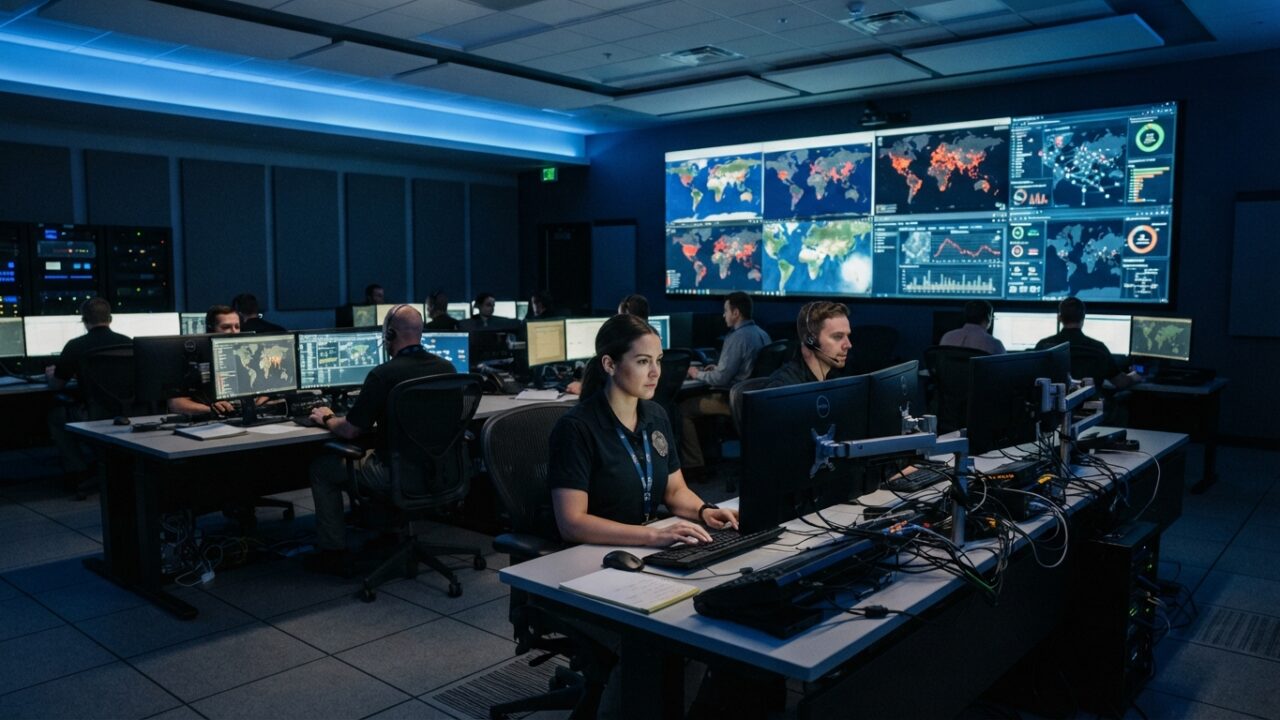
More than two decades after the September 11 attacks killed nearly 3,000 people, intelligence and security agencies across the Western world are still implementing reforms designed to prevent a repeat of the catastrophic failures that allowed the plot to succeed. The reassessment has taken on renewed urgency as agencies confront threats from artificial intelligence, cyber warfare, and a resurgence of extremist ideologies.
The 9/11 attacks exposed fundamental weaknesses in how intelligence was gathered, analyzed, and shared between agencies. Despite multiple warning signs in the months preceding the attacks, bureaucratic silos prevented crucial information from reaching those who could have acted on it. The consequences of those organizational failures continue to shape security doctrine today.
The pre-attack intelligence landscape
In the summer of 2001, the CIA possessed information indicating that two known Al-Qaeda operatives had entered the United States. The FBI had reports of suspicious individuals taking flight training lessons. Immigration officials had flagged unusual visa applications. Yet none of these agencies effectively communicated with one another, and no single entity had responsibility for connecting the disparate threads.
The 9/11 Commission, established to investigate the attacks, identified this lack of information sharing as perhaps the most critical systemic failure. Intelligence officials operated within their own organizational boundaries, protecting sources and methods rather than collaborating to identify threats. The commission described a system in which the right hand rarely knew what the left was doing.
Congressional investigators later revealed that the National Security Agency had intercepted communications suggesting an imminent attack but had not translated or distributed them with sufficient urgency. By the time analysts recognized their significance, it was too late.
Structural reforms and their implementation
The most visible response was the creation of the Department of Homeland Security in 2002, consolidating 22 federal agencies under a single organizational structure. This massive bureaucratic reorganization aimed to eliminate the fragmentation that had proved so costly.
The Intelligence Reform and Terrorism Prevention Act of 2004 established the position of Director of National Intelligence to coordinate among the 17 agencies comprising the intelligence community. The law mandated greater information sharing and created the National Counterterrorism Center as a hub for integrating intelligence from multiple sources.
These structural changes came with significant growing pains. The consolidation of agencies created new layers of bureaucracy even as it attempted to eliminate old ones. Critics argued that adding another administrative level risked further slowing decision-making processes. Turf battles persisted as agencies adjusted to sharing authority and information.
Technology and data integration
Beyond organizational restructuring, intelligence services invested heavily in technological systems designed to facilitate information sharing. New databases allowed analysts from different agencies to access a common pool of intelligence. Automated systems began flagging potential connections that human analysts might miss.
The integration of these systems proved more challenging than anticipated. Legacy computer systems in older agencies could not easily communicate with newer platforms. Security protocols designed to protect classified information sometimes hindered legitimate information sharing. Privacy concerns added another layer of complexity as agencies balanced civil liberties against security imperatives.
Persistent challenges in threat assessment
While the reforms addressed many of the specific failures that enabled the 9/11 attacks, new challenges have emerged. The threat landscape has evolved significantly since 2001. Terrorist organizations now operate in more decentralized networks, making them harder to infiltrate and monitor. The rise of homegrown extremism presents different detection challenges than internationally coordinated plots.
Intelligence agencies must now contend with encrypted communications, the dark web, and adversaries who have studied their methods and adapted accordingly. The same digital technologies that facilitate information sharing also enable terrorists to communicate and coordinate in ways that evade traditional surveillance.
Senior intelligence officials acknowledge that the reforms implemented after 9/11, while necessary, have not eliminated the possibility of another major intelligence failure. The sheer volume of information now available to analysts has created different problems. Sorting signal from noise in an era of big data requires resources and analytical capabilities that continue to strain agency budgets.
Lessons applied to emerging threats
The 9/11 experience has influenced how agencies approach new categories of threats. When confronting Russian election interference, Chinese espionage, and domestic extremism, intelligence services have emphasized the importance of cross-agency collaboration established after 2001.
The COVID-19 pandemic revealed that some coordination problems persist. Intelligence agencies possessed early warnings about the virus but struggled to ensure their assessments reached policymakers in time to influence decisions. The experience highlighted that organizational reforms alone cannot guarantee that intelligence will be heard and acted upon.
International cooperation and intelligence sharing
The post-9/11 era saw expanded intelligence cooperation between allied nations. The Five Eyes alliance, comprising the United States, United Kingdom, Canada, Australia, and New Zealand, deepened its coordination. European agencies established new mechanisms for sharing terrorism-related intelligence despite longstanding privacy protections that complicated data transfers.
This international dimension has proven crucial as terrorist networks operate across borders. A plot may be planned in one country, financed through another, and executed in a third. Effective prevention requires information to flow between nations as readily as it now does between domestic agencies.
However, diplomatic tensions can complicate these relationships. Intelligence sharing requires trust, and political disagreements between governments can impede the free flow of information. Agencies must constantly balance the value of shared intelligence against concerns about protecting sources and methods from potential compromise.
The human dimension
Beyond systems and structures, intelligence work remains fundamentally dependent on human judgment. Analysts must decide which pieces of information merit attention and how to interpret ambiguous signals. The post-9/11 reforms emphasized the importance of analytical rigor and challenging assumptions.
Intelligence agencies have worked to diversify their workforces, recognizing that analysts with different backgrounds and perspectives are more likely to identify threats that others might miss. Language skills, cultural knowledge, and varied life experiences all contribute to more robust threat assessment.
Training programs now emphasize the cognitive biases that can lead analysts astray. Understanding how confirmation bias, groupthink, and other psychological factors influence intelligence assessment has become a core component of professional development.
Ongoing evolution
As the anniversary of the attacks recedes further into history, newer members of the intelligence community have no personal memory of that day. Agencies face the challenge of maintaining institutional memory and ensuring that hard-won lessons are not forgotten as personnel turn over.
Current intelligence officials describe a continuous process of learning and adaptation. Each near-miss and each successful prevention provides new insights into what works and what requires refinement. The goal is not to fight the last war but to anticipate the next threat, whatever form it takes.
The application of artificial intelligence to intelligence analysis presents both opportunities and risks. Machine learning algorithms can process vast quantities of data far faster than human analysts, potentially identifying patterns that would otherwise remain hidden. Yet these same technologies raise questions about accuracy, bias, and accountability that the intelligence community is still working to address.
