
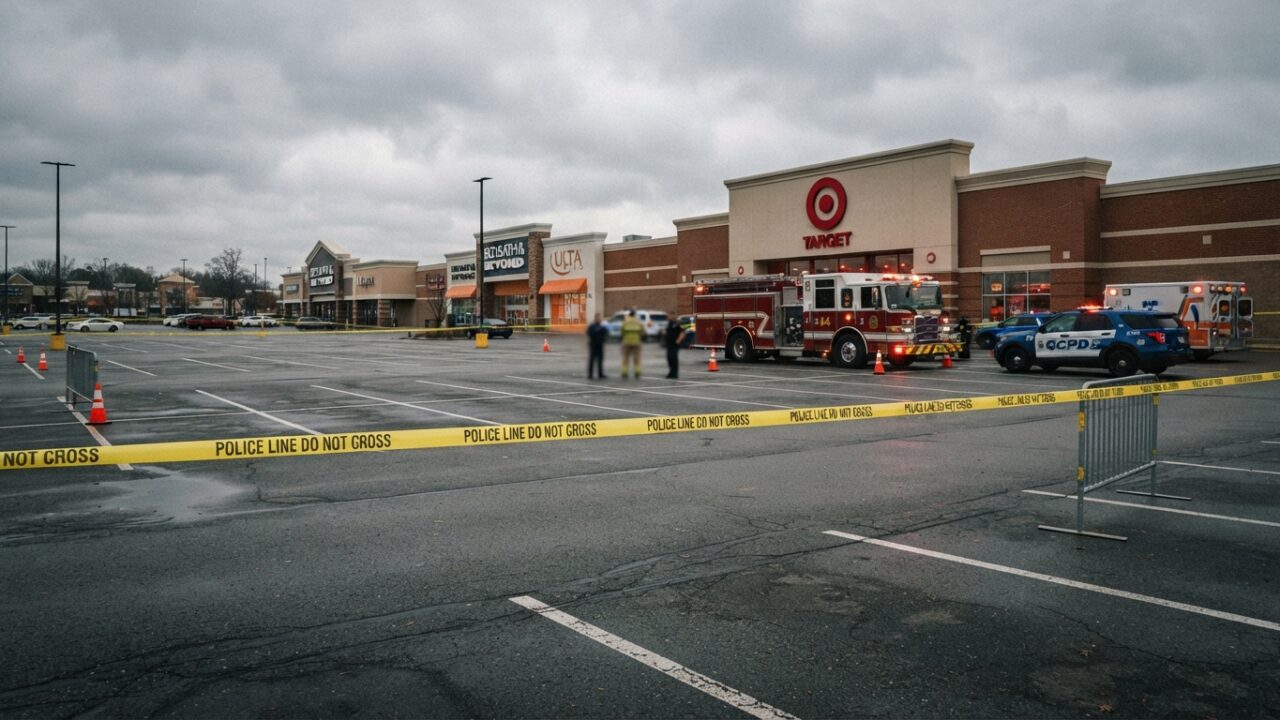
Three people died when a television news helicopter crashed in a parking lot in Pomona, a city in Los Angeles County, on Tuesday afternoon. The aircraft, which was on a reporting assignment, went down in an area near commercial buildings, according to local authorities.
Emergency services responded to the scene shortly after the crash was reported. All three occupants of the helicopter were pronounced dead at the site. No injuries were reported on the ground, and no structures were damaged in the incident.
Crash occurred during routine flight
The helicopter was engaged in standard news gathering operations when it crashed. Witnesses reported seeing the aircraft descend rapidly before impact. The exact circumstances that led to the crash remain under investigation.
Local fire departments and police secured the crash site immediately after arrival. The parking lot where the helicopter came down was closed to the public as investigators began their work.
The identities of the three victims have not yet been released publicly, pending notification of family members. News organizations typically operate helicopters with a pilot and one or more journalists or camera operators on board.
Investigation launched into cause
Federal aviation authorities have opened an investigation into the crash. The National Transportation Safety Board, which examines all civil aviation accidents in the United States, will lead the inquiry into what caused the helicopter to go down.
Investigators will examine multiple factors, including mechanical issues, weather conditions, and pilot actions in the moments before the crash. The wreckage will be carefully documented and key components will be examined for potential failures.
Weather conditions in the Pomona area at the time of the crash were reported as clear, with good visibility. This suggests that weather may not have been a contributing factor, though all possibilities remain open at this early stage.
News helicopters face inherent risks
Television news helicopters operate in challenging conditions, often flying at low altitudes over urban areas while journalists film and report. These aircraft make frequent takeoffs and landings and may hover in place for extended periods.
The work involves navigating complex airspace, sometimes in congested areas with multiple aircraft operating simultaneously. Pilots must maintain awareness of buildings, transmission towers, power lines, and other obstacles while also supporting the reporting mission.
Despite these challenges, fatal crashes involving news helicopters in the United States are relatively uncommon. The industry has implemented safety protocols over the years, though the nature of the work means some level of risk remains inherent.
Previous incidents in Southern California
Southern California, with its sprawling metropolitan areas and multiple television markets, maintains one of the largest fleets of news helicopters in the country. The region’s frequent breaking news events, from wildfires to police pursuits, mean these aircraft are often in the air.
The area has seen helicopter crashes in the past. Each incident has prompted reviews of safety procedures and equipment standards within news organizations. Aviation experts regularly assess the risks associated with low-altitude urban flight operations.
The Federal Aviation Administration maintains strict regulations governing helicopter operations over populated areas. Pilots must hold specific certifications and aircraft must meet maintenance standards designed to minimize the risk of mechanical failure.
Impact on local news operations
The loss of three lives will have immediate effects on news coverage operations in the Los Angeles area. Newsrooms may reassess their aviation programs while the investigation proceeds.
Television stations rely heavily on aerial footage for coverage of traffic, breaking news, and live events. The distinctive perspective provided by helicopters has become central to how local news is gathered and presented in major metropolitan areas.
News directors and station managers will likely review safety protocols in the coming days. Some stations may temporarily ground their aircraft while awaiting preliminary findings from investigators.
Community response in Pomona
Pomona, located about 30 miles east of downtown Los Angeles, has a population of approximately 150,000 residents. The crash site in a parking lot meant that while the loss of life was confined to those aboard the aircraft, the incident occurred in a public area where the outcome could have been different.
Local officials expressed relief that no one on the ground was injured, while also acknowledging the tragedy for the families of those killed. The city has offered support to investigators and coordinated with county authorities on the response.
Residents near the crash site reported hearing the impact and seeing emergency vehicles arrive rapidly. Some described the sound as shocking and the scene as disturbing, with debris scattered across the parking area.
What comes next
The National Transportation Safety Board typically releases a preliminary report within two weeks of an aviation accident. This initial document provides basic facts about what occurred but does not assign probable cause.
A full investigation can take a year or more to complete. Investigators will interview witnesses, review maintenance records, analyze flight data if available, and examine the wreckage in detail. The final report will include findings and any safety recommendations.
Federal authorities have asked anyone who witnessed the crash or has video footage to contact them. Such evidence can prove crucial in reconstructing the sequence of events leading to an accident.
The three deaths add to the toll of aviation accidents in the United States this year. While commercial airline travel remains statistically very safe, smaller aircraft operations including helicopters continue to present higher risks. Each fatal incident prompts renewed attention to how those risks can be further reduced without compromising the legitimate work these aircraft perform.
