
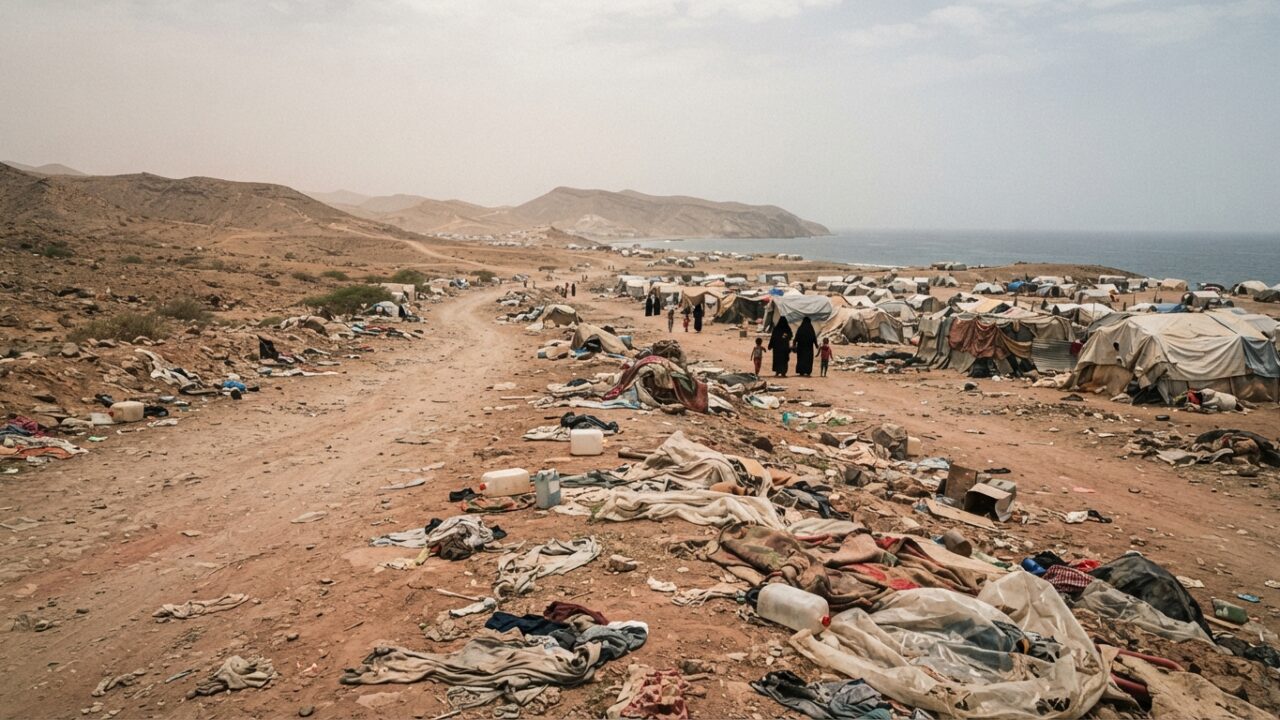
Close to 50,000 Yemeni civilians have abandoned their homes in recent days as Houthi forces advance along the Red Sea coastline, according to reports from humanitarian organizations monitoring the situation. The displacement represents one of the largest population movements in Yemen’s western regions in recent months, adding to the humanitarian burden in a country already grappling with one of the world’s most severe crises.
The exodus began as Houthi fighters pushed through several coastal districts, prompting residents to flee toward areas perceived as safer. Local sources indicate that families packed belongings hastily, with many leaving with only what they could carry as fighting intensified in their communities.
Strategic coastal corridor under pressure
The Red Sea coastal strip holds strategic importance for multiple reasons. The region provides access to maritime routes and has historically served as a supply corridor for goods entering Yemen. Control over these areas offers tactical advantages to whichever faction holds them, influencing both military logistics and economic leverage.
The Houthi advance along this coastline forms part of broader territorial shifts that have characterized Yemen’s conflict since it escalated dramatically in 2015. The rebel movement, which controls significant portions of northern Yemen including the capital Sanaa, has periodically sought to expand its territorial control in western regions.
Residents fleeing the advance described a climate of fear and uncertainty. Families reported hearing gunfire and explosions as fighting reached the outskirts of their towns and villages. Many chose to leave preemptively rather than wait for combat to reach their immediate neighbourhoods.
Humanitarian organizations sound alarm
Aid agencies working in Yemen have expressed concern about the capacity to respond to this latest displacement wave. Humanitarian infrastructure in receiving areas was already strained before the recent arrivals, with resources stretched thin across multiple crisis zones throughout the country.
The displaced population includes significant numbers of women, children, and elderly individuals who face particular vulnerabilities during forced movement. Access to clean water, shelter, and medical care becomes immediately critical for those who have left their homes with minimal preparation.
Organizations operating in Yemen note that the displacement occurs against a backdrop of existing humanitarian need. Years of conflict have damaged or destroyed essential infrastructure including hospitals, schools, and water systems. Economic collapse has left millions dependent on humanitarian assistance for survival.
Pattern of displacement continues
This recent exodus adds to Yemen’s existing displaced population, which numbers in the millions. The country has witnessed repeated waves of displacement since the conflict intensified, with families sometimes forced to move multiple times as front lines shift.
Previous displacements have resulted in overcrowded temporary settlements where living conditions deteriorate rapidly. Access to sanitation facilities becomes inadequate, disease outbreaks occur with increased frequency, and children miss extended periods of education.
The cyclical nature of displacement in Yemen creates compounding difficulties. Families who fled earlier phases of fighting and attempted to rebuild lives elsewhere now face potential displacement again. Each movement erodes whatever stability people managed to establish, deepening poverty and trauma.
Regional implications of coastal control
The Houthi presence along the Red Sea coast carries implications beyond Yemen’s borders. The rebel group has previously launched attacks on maritime vessels in the Red Sea, affecting one of the world’s most important shipping lanes. Commercial vessels transiting between the Suez Canal and the Indian Ocean pass through these waters, carrying substantial portions of global trade.
International maritime security has become intertwined with Yemen’s internal conflict. Naval forces from several countries maintain presence in the region, ostensibly to protect shipping but also monitoring developments along the Yemeni coastline.
The economic dimension of coastal control matters significantly for Yemen itself. Ports along the Red Sea historically served as entry points for imports on which the country depends heavily. Yemen imports the vast majority of its food and fuel, making port access essential for civilian populations.
Limited international attention
Despite the scale of suffering, Yemen’s conflict receives relatively limited sustained international attention compared to other global crises. Diplomatic efforts to broker lasting peace have repeatedly stalled, with various initiatives failing to produce breakthrough agreements.
The humanitarian funding situation remains precarious. Aid appeals for Yemen consistently receive less than the amounts requested, forcing organizations to make difficult choices about which needs to prioritize. The latest displacement will intensify pressure on already insufficient resources.
Local communities in receiving areas face their own challenges as they attempt to accommodate newly arrived families. Resources that were barely adequate for existing populations must now stretch further, creating tensions and hardship for both displaced people and host communities.
Uncertain outlook ahead
The trajectory of the current Houthi advance remains unclear. Whether fighting will continue to push populations further from their homes, stabilize at current lines, or prompt counter-offensives from opposing forces cannot be predicted with certainty.
What appears certain is that the nearly 50,000 people who have already fled face an indefinite period away from their homes. Return depends on security conditions improving, which could take months or years given Yemen’s conflict dynamics.
Humanitarian workers emphasize that regardless of military outcomes, the immediate needs of displaced civilians require urgent attention. Shelter, food, water, and medical care cannot wait for political or military resolution. The coming weeks will test the capacity of aid systems to respond while addressing the needs of millions already dependent on assistance throughout Yemen.
The displacement along the Red Sea coast represents another chapter in Yemen’s protracted humanitarian emergency, which has created suffering on a massive scale with no resolution in sight.
