
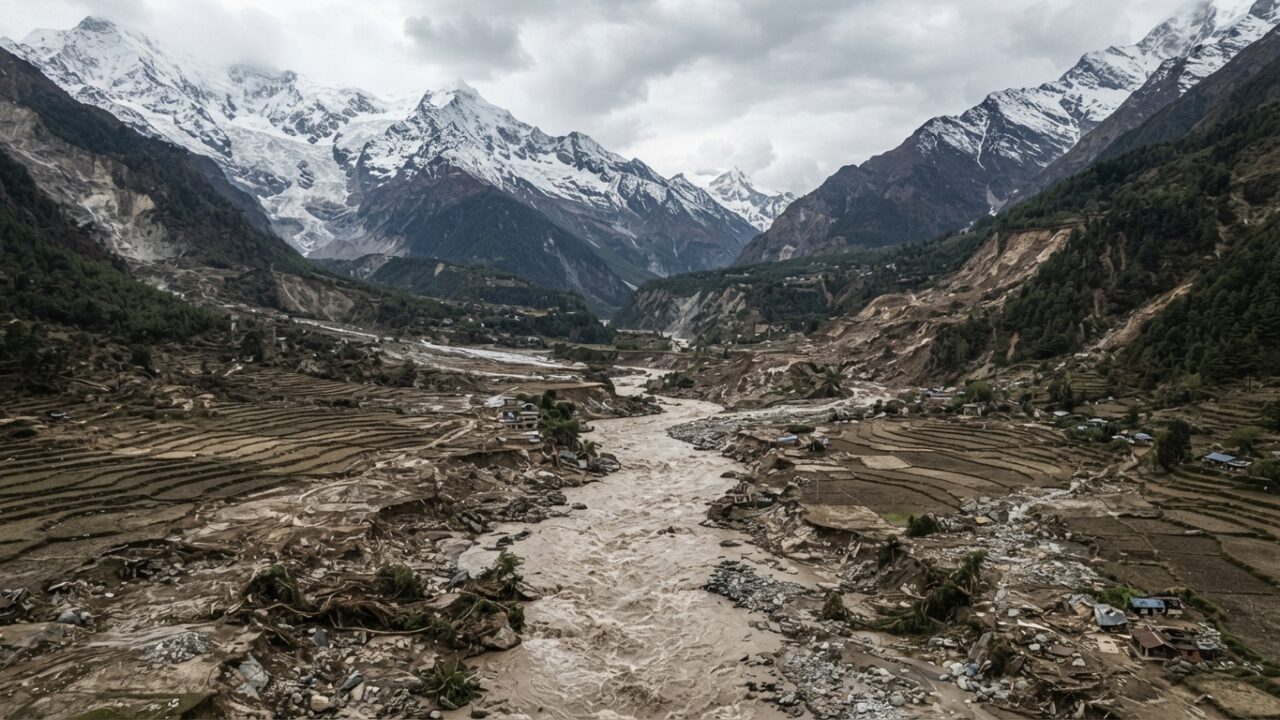
More than a thousand people remain missing following a catastrophic flash flood in Nepal triggered by the collapse of a glacial formation near the border with Tibet. The disaster has devastated remote communities in the mountainous region, with rescue operations hampered by difficult terrain and continued instability in the affected areas.
Authorities are working to determine the full scale of the disaster as communication networks remain severely disrupted across multiple districts. The flood waters, released suddenly from what appears to have been a glacial lake outburst, swept through valleys with little warning, catching residents unprepared.
Glacial Lake Outburst Floods: A Growing Threat
Glacial lake outburst floods, known by the acronym GLOF, occur when water contained by a glacier or moraine dam suddenly releases. These events have become increasingly common in the Himalayan region as rising temperatures accelerate glacier melting and create unstable ice-dammed or moraine-dammed lakes.
The Himalayas contain thousands of glacial lakes, many of which have expanded significantly over recent decades. Scientific monitoring has identified hundreds of these lakes as potentially dangerous, capable of releasing massive volumes of water with devastating downstream consequences.
Nepal sits in a particularly vulnerable position, with numerous high-altitude glacial formations in its northern territories along the border with Tibet. Previous GLOF events in the region have caused significant loss of life and infrastructure damage, though the current incident appears to rank among the most severe in recent memory.
Remote Communities Bear the Brunt
The missing persons are believed to be primarily from remote mountain villages situated in valleys downstream from the glacial collapse. These communities typically have limited infrastructure and communication systems, making both early warning and post-disaster assessment extremely challenging.
Search and rescue teams face significant obstacles in reaching affected areas. The mountainous terrain requires helicopter access in many cases, and weather conditions in the high Himalayas can change rapidly, grounding aircraft for extended periods. Ground routes may have been destroyed or rendered impassable by the flood waters and associated debris flows.
Local authorities have mobilized available resources, but the scale of the disaster and the remoteness of the affected zones have stretched response capabilities. International assistance may be required to mount a comprehensive search and rescue operation across the impacted region.
Infrastructure and Economic Impact
Beyond the human toll, the flooding has likely caused extensive damage to critical infrastructure in the affected districts. Mountain roads, bridges, hydroelectric installations, and agricultural lands along river courses are particularly vulnerable to GLOF events.
Nepal’s mountain communities rely heavily on agriculture and increasingly on tourism for their livelihoods. Damage to terraced farmlands, irrigation systems, and trekking routes could have long-lasting economic consequences for populations already living in challenging conditions.
The country’s hydroelectric sector, a crucial component of Nepal’s energy infrastructure and economic development plans, may also have sustained damage. Several hydroelectric projects operate in high-altitude zones where glacial lake outbursts pose a recognized risk.
Climate Change and Himalayan Glaciers
Scientists have documented accelerating glacier retreat throughout the Himalayan range, directly linked to rising global temperatures. The Third Pole, as the Himalayan glacial region is sometimes called, contains the largest volume of ice outside the polar regions and feeds major river systems supporting billions of people across Asia.
Research published in recent years has shown that Himalayan glaciers are losing ice at rates that have doubled since the turn of the century. This rapid melting creates new glacial lakes and expands existing ones, increasing the risk of catastrophic outburst floods.
The current disaster underscores the immediate human consequences of these long-term environmental changes. Mountain communities, which have contributed negligibly to global greenhouse gas emissions, find themselves on the front lines of climate-related disasters.
Previous GLOF Disasters in the Region
Nepal has experienced several significant glacial lake outburst floods in its recorded history. In 1985, a GLOF from Dig Tsho glacial lake destroyed a nearly completed hydroelectric project and caused extensive downstream damage, though it occurred in a relatively less populated area.
The 2015 earthquakes that devastated Nepal also raised concerns about glacial lake stability, as seismic activity can trigger ice avalanches or compromise natural dams. Monitoring efforts intensified following those disasters, but resources for comprehensive surveillance of all potentially dangerous glacial lakes remain limited.
Neighboring countries including Bhutan and India have also experienced GLOF events, prompting regional discussions about early warning systems and risk mitigation strategies. However, the technical challenges and costs associated with managing glacial lake hazards in remote, high-altitude environments remain substantial.
Ongoing Rescue and Relief Efforts
As rescue operations continue, authorities face the dual challenge of searching for missing persons while providing emergency assistance to survivors who may have lost homes and livelihoods. Temporary shelter, medical care, food, and clean water are immediate priorities in affected communities.
The full casualty count remains uncertain as communication continues to be restored to isolated areas. The number of missing persons may change significantly as more information becomes available and as some individuals reported missing are located in areas that have been cut off from contact.
Weather conditions in the coming days will be crucial for rescue operations. The monsoon season, though typically waning at this time of year, can still bring rainfall that would complicate helicopter operations and raise concerns about secondary flooding or landslides in areas destabilized by the initial disaster.
International disaster response organizations are monitoring the situation and preparing to provide assistance if requested by Nepali authorities. The scale of the disaster may necessitate significant external support for both immediate rescue operations and longer-term reconstruction efforts.
