
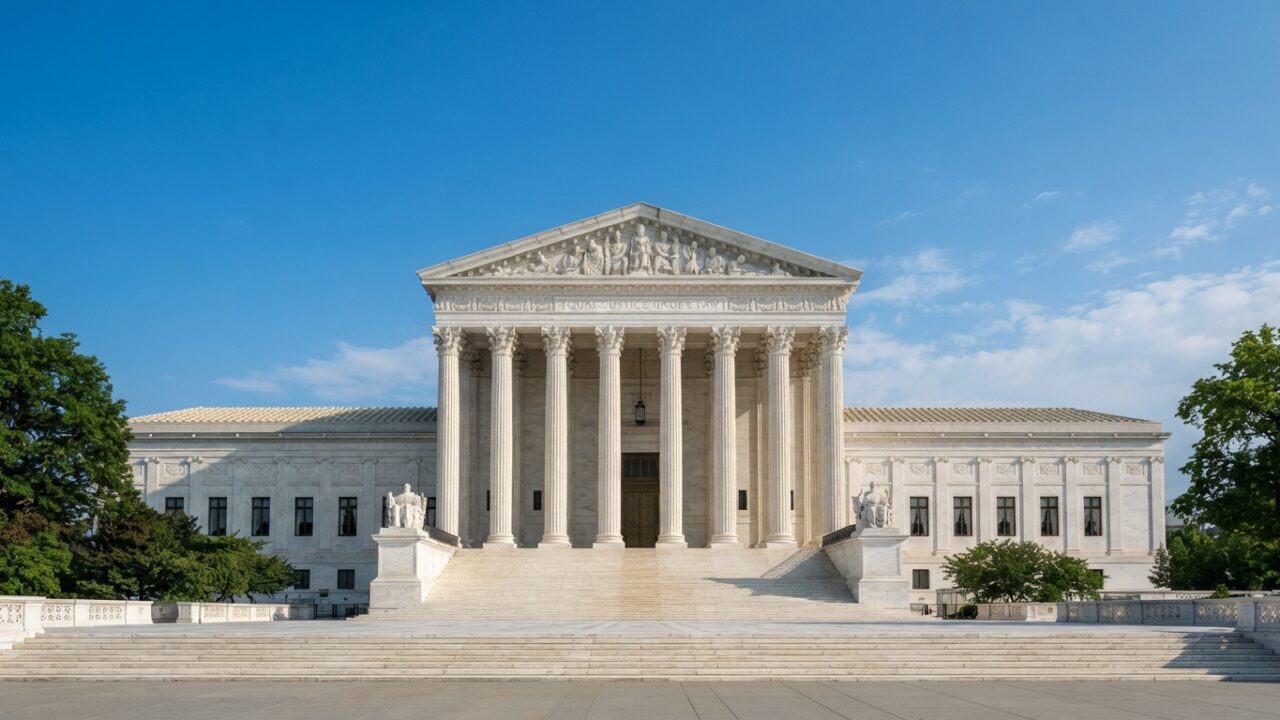
The Trump administration has formally requested the Supreme Court to allow implementation of more restrictive mail-in ballot regulations, marking a significant move in the ongoing national debate over voting access and election security. The Justice Department’s petition comes as states prepare their election procedures for the 2026 midterm cycle.
The case centers on regulations that would impose stricter verification requirements for absentee ballots and tighten deadlines for when mail-in votes must be received to be counted. Lower courts had previously blocked portions of these rules, citing concerns about disenfranchisement of eligible voters.
Legal Arguments at the Core
The administration’s filing argues that states have broad constitutional authority to establish election procedures, including requirements designed to prevent fraud and ensure ballot integrity. The Justice Department contends that the challenged restrictions represent reasonable safeguards rather than barriers to voting.
Federal appeals courts had issued mixed rulings on the regulations, with some circuits upholding certain provisions while striking down others. This legal patchwork has created varying standards across different states, prompting the administration to seek nationwide clarity from the Supreme Court.
Civil rights organizations that oppose the restrictions maintain they would disproportionately affect elderly voters, people with disabilities, rural residents, and communities with less reliable postal service. These groups argue the measures solve a problem that evidence shows does not exist on any meaningful scale.
Specific Provisions Under Review
The contested regulations include several key components. One provision would require mail-in ballots to arrive by Election Day itself, eliminating the grace period many states currently allow for ballots postmarked by Election Day. Another mandates additional identity verification beyond signature matching, such as providing driver’s license numbers or the last four digits of Social Security numbers.
A third element would restrict who can assist voters in returning their absentee ballots, limiting the practice sometimes called ballot collection or harvesting. The rules would also reduce the window during which voters can request absentee ballots in federal elections.
States have historically managed their own election procedures with minimal federal intervention, but recent years have seen increasing federal involvement in voting rights disputes. The question of how much authority states retain versus federal oversight requirements remains constitutionally unsettled in several areas.
Political and Practical Implications
Mail-in voting expanded dramatically during the 2020 election cycle, when pandemic concerns led many states to relax restrictions temporarily. That expansion became politically charged, with claims about election security on one side and warnings about voter suppression on the other.
Election administrators in multiple states have expressed concern about implementing rule changes close to election cycles. Training poll workers, updating voter information systems, and educating the public about new requirements all require substantial lead time that becomes compressed when regulations change shortly before elections.
The financial implications also matter. States would need to invest in enhanced verification systems, additional staffing to process ballots under tighter deadlines, and public education campaigns to inform voters about changed procedures. These costs fall particularly hard on counties with limited budgets.
Historical Context of Voting Access
The current dispute fits within a longer American debate over ballot access that extends back decades. The Voting Rights Act of 1965 established federal protections against discriminatory voting practices, but a 2013 Supreme Court decision weakened key enforcement provisions of that law.
Since that ruling, multiple states have enacted various measures affecting voting procedures. Proponents describe these as necessary updates to security protocols, while opponents characterize them as attempts to make voting more difficult for specific populations likely to support particular candidates or parties.
Academic research on mail-in voting fraud has consistently found it to be exceedingly rare, though isolated incidents do occur. Studies examining states with longstanding vote-by-mail systems have not identified systematic fraud problems, but debates continue about whether expanded use in other states might create different vulnerabilities.
Supreme Court Dynamics
The case arrives at a Supreme Court that has shown interest in election law questions in recent terms. The current judicial composition suggests the Court may be receptive to arguments emphasizing state authority over election procedures, though predicting outcomes remains uncertain.
The Court’s decision on whether to hear the case, expected in coming weeks, will itself be significant. Declining to take the case would leave lower court rulings in place, maintaining the current blocked status of the restrictions. Agreeing to hear it would set up arguments likely to occur before the end of the current term.
Legal observers note the Court has increasingly used its emergency docket to address election disputes on compressed timelines, sometimes issuing unsigned orders with limited or no explanation. Whether this case follows that pattern or receives full briefing and argument could affect how thoroughly the Court examines the underlying constitutional questions.
State Responses and Preparations
Election officials in states that would be affected by the regulations have begun contingency planning for multiple scenarios. Some are preparing to implement the new requirements if the Court allows them, while simultaneously maintaining current procedures in case the restrictions remain blocked.
Several state legislatures are considering their own voting legislation that would either align with or diverge from the federal standards at issue. This creates potential for further complexity, with federal and state rules potentially conflicting or overlapping in ways that confuse voters and election administrators alike.
Voting rights organizations have indicated they will continue legal challenges regardless of the Supreme Court’s decision on this particular case. They argue that even if the Court allows these specific restrictions, questions will remain about how they are implemented and whether application creates discriminatory effects in practice.
What Remains Uncertain
The timeline for Supreme Court action remains unclear. The justices could act quickly given the electoral calendar, or they could follow standard procedures that might not produce a final ruling until 2026. How that timing intersects with state election preparation schedules could determine whether any changes affect the upcoming midterm elections.
The scope of any eventual ruling also remains to be seen. The Court could issue a narrow decision addressing only the specific provisions at issue, or it could establish broader principles governing state authority over mail-in voting procedures that would guide future disputes.
Public reaction will likely divide along familiar lines, with responses shaped more by political affiliation than by the legal reasoning the Court employs. The case touches on fundamental questions about democratic participation that have generated intense disagreement in recent election cycles, and a Supreme Court decision is unlikely to settle those underlying debates.
