
Former President Donald Trump has threatened to prevent Canadian aerospace manufacturer Bombardier from selling its products in the United States, marking a significant escalation in trade tensions between the two neighboring countries. The statement comes amid a broader pattern of protectionist rhetoric and policies targeting Canadian industries.
Trump’s threat specifically targets Bombardier, one of Canada’s flagship industrial companies and a major player in the global aerospace sector. The Montreal-based manufacturer produces business jets, commercial aircraft, and rail transportation equipment, with substantial operations in both Canada and the United States.
Historical Context of Bombardier-US Trade Disputes
This is not the first time Bombardier has found itself in the crosshairs of US trade policy. During Trump’s first presidency, the company faced severe pressure over its C-Series commercial jets. In 2017, the US Department of Commerce imposed punitive tariffs exceeding 290 percent on Bombardier’s C-Series aircraft following a complaint from Boeing, which claimed the Canadian manufacturer benefited from unfair government subsidies.
The dispute centered on a deal Bombardier struck with Delta Air Lines for 75 aircraft. Boeing argued that Canadian federal and provincial subsidies allowed Bombardier to sell the jets below cost. The initial tariff threat put thousands of jobs at risk in Northern Ireland, where the aircraft wings were manufactured, and in Canada where final assembly took place.
The US International Trade Commission ultimately ruled in Bombardier’s favor in 2018, rejecting Boeing’s claims and removing the proposed tariffs. However, the damage had been done. The prolonged uncertainty forced Bombardier to sell a majority stake in its C-Series program to European aerospace giant Airbus for virtually nothing. Airbus rebranded the aircraft as the A220 and moved much of the production capacity.
Current Trade Environment Between US and Canada
Trump’s latest threat emerges against a backdrop of intensifying trade friction between the United States and Canada. Recent weeks have seen both countries impose new rounds of tariffs on each other’s goods, with Canada announcing fresh duties on American products in response to US trade measures.
The bilateral trade relationship between the two countries represents one of the largest in the world, with approximately $900 billion in goods and services crossing the border annually. Canada is the top export destination for 36 US states, making any disruption to this trade flow economically significant for both nations.
Key sectors affected by the escalating trade tensions include steel and aluminum, lumber, dairy products, and now potentially aerospace. The uncertainty created by these disputes affects investment decisions, supply chain planning, and employment on both sides of the border.
Bombardier’s Current Business Profile
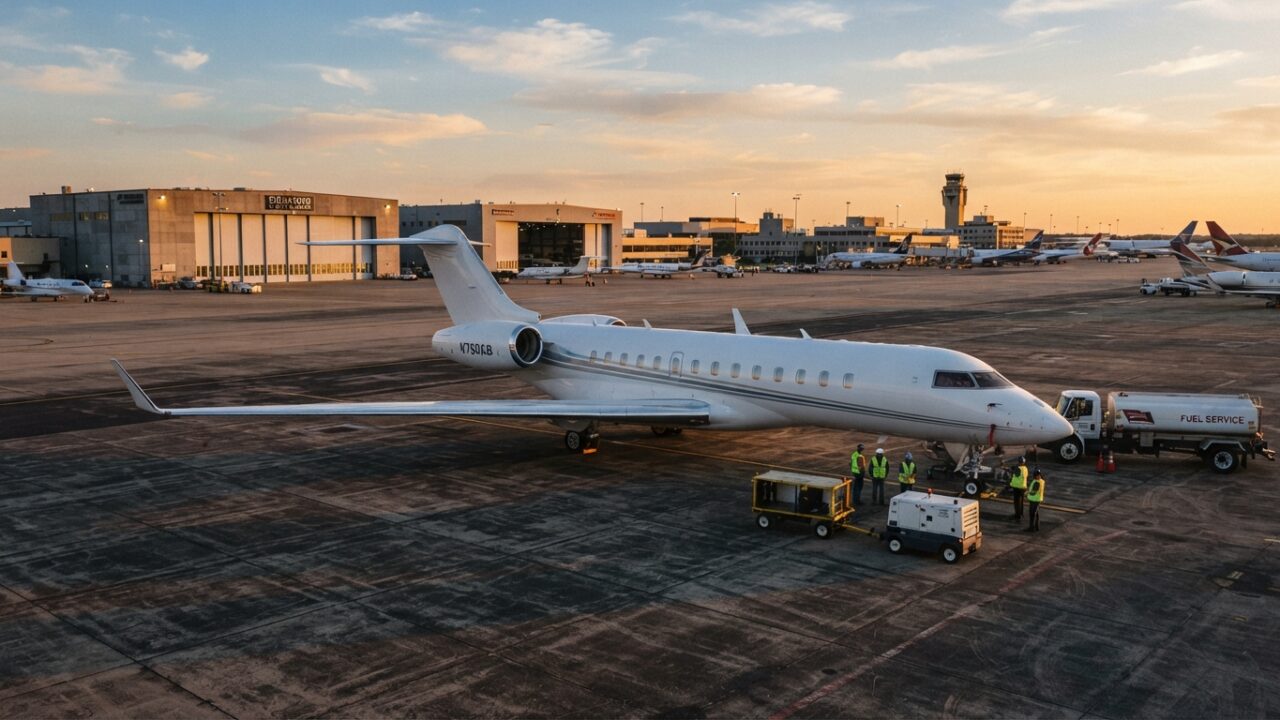
After divesting its commercial aviation division, Bombardier has refocused entirely on business aviation. The company manufactures the Learjet, Challenger, and Global families of business jets, serving corporate clients, wealthy individuals, and governments worldwide.
Bombardier employs approximately 14,500 people in Canada and has significant manufacturing facilities in Montreal and Toronto. The company also operates production sites in the United States, including facilities in Kansas and Texas that support its business jet programs.
The US market represents a critical component of Bombardier’s revenue stream. American customers account for a substantial portion of business jet purchases globally, and any restriction on sales to US buyers would severely impact the company’s financial performance and viability.
Legal and Regulatory Framework
Any attempt to ban Bombardier products from the US market would face significant legal and practical hurdles. Such a move would likely require invoking national security provisions under Section 232 of the Trade Expansion Act or emergency economic powers, measures typically reserved for extreme circumstances.
The United States-Mexico-Canada Agreement (USMCA), which replaced NAFTA and was negotiated during Trump’s first term, contains provisions designed to facilitate trade and investment between the three countries. Arbitrary bans on specific companies could violate these treaty obligations and expose the US to legal challenges through the agreement’s dispute resolution mechanisms.
Additionally, Bombardier’s US operations and workforce could complicate any ban. Restricting the company’s ability to sell products in America would directly harm American workers employed at Bombardier facilities and throughout the supply chain supporting its operations.
Economic and Political Implications
The threat against Bombardier carries implications beyond the immediate business impact. Canada has historically been one of America’s closest allies, with deep economic integration, shared defense commitments through NATO and NORAD, and extensive people-to-people ties.
Trade disputes between the countries risk damaging this broader relationship at a time when both nations face global challenges requiring coordination. Issues ranging from Arctic security to managing relations with China benefit from strong US-Canada cooperation.
For Bombardier, the uncertainty itself creates challenges. Aircraft purchases, particularly business jets that can cost tens of millions of dollars each, require long-term confidence in product support, parts availability, and service networks. Customers may hesitate to order aircraft from a manufacturer facing potential market access restrictions.
Industry Response and Next Steps
The aerospace industry has not yet issued formal responses to Trump’s latest threat. However, previous trade disputes involving aircraft manufacturers have drawn strong reactions from industry associations, labor unions, and affected communities emphasizing the integrated nature of aerospace supply chains and the mutual benefits of open trade.
What remains unclear is whether Trump’s statement represents a formal policy proposal with potential implementation mechanisms or primarily serves as political rhetoric aimed at domestic audiences. The distinction matters significantly for Bombardier’s planning and the broader trade relationship between the two countries.
Canadian government officials have not publicly responded to the specific Bombardier threat at the time of reporting. Previous trade disputes have seen Ottawa vigorously defend Canadian companies and implement retaliatory measures when deemed necessary.
The situation continues to develop as both countries navigate an increasingly complex trade environment characterized by competing economic interests, political pressures, and the legacy of previous disputes that have left lasting impacts on companies like Bombardier.