
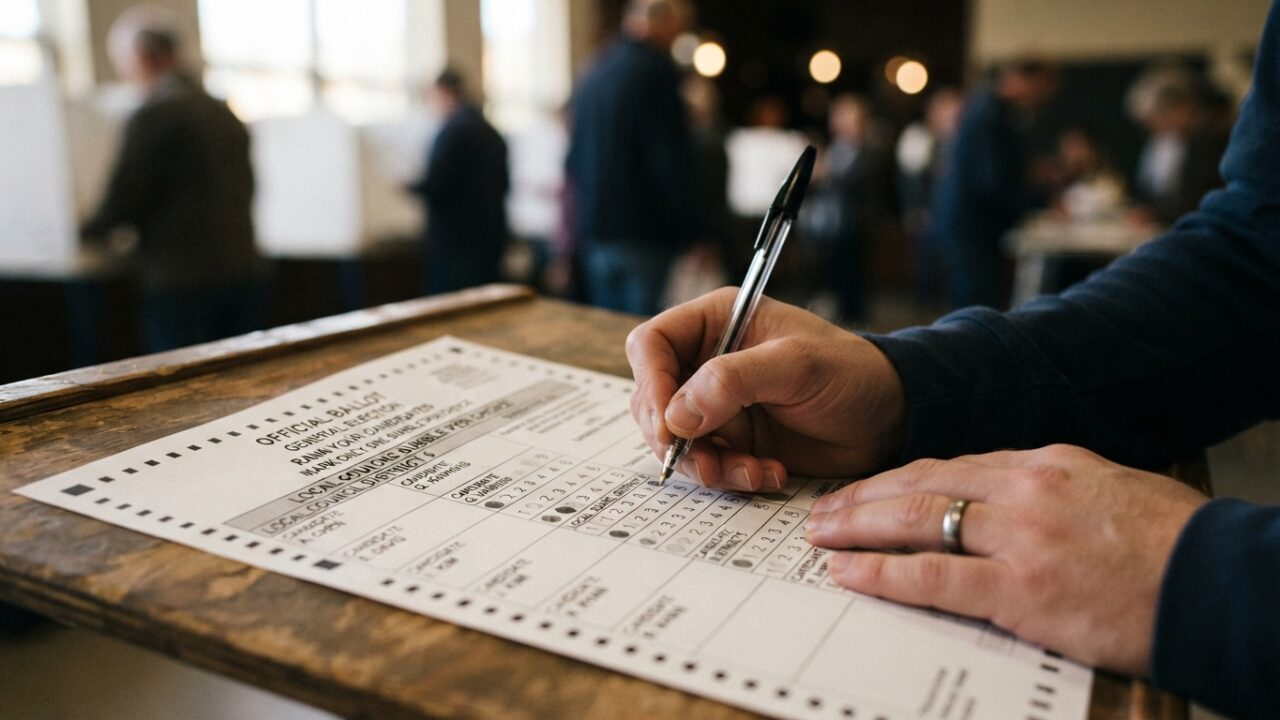
Alaska voters will face an unusual challenge this November when two candidates named Dan Sullivan appear on the ballot for the state’s US Senate race. The coincidence has election officials warning of potential confusion and prompting discussions about ballot design and voter education ahead of the midterm elections.
The incumbent Republican Senator Dan Sullivan, who has held the seat since 2015, will face a challenger who shares his exact name. The second Dan Sullivan is running as an independent candidate, creating a situation rarely seen in American electoral politics where voters must distinguish between two identically named contenders for the same office.
Alaska’s Electoral Landscape
Alaska implemented a new ranked-choice voting system in recent elections, fundamentally changing how candidates compete and how voters cast their ballots. Under this system, voters rank candidates in order of preference rather than selecting just one. If no candidate receives more than 50 percent of first-choice votes, the candidate with the fewest votes is eliminated and their supporters’ second choices are redistributed until someone achieves a majority.
The ranked-choice format was first used in Alaska’s 2022 elections and has already produced surprising outcomes. In the 2022 special election for the US House seat, Democrat Mary Peltola defeated Republican Sarah Palin despite Alaska’s conservative lean, demonstrating how the system can produce results different from traditional plurality voting.
This November’s Senate race will test whether voters can navigate the added complexity of distinguishing between two candidates with identical names while also ranking their preferences. Election administrators are preparing additional voter education materials to address this specific challenge.
The Incumbent’s Record
Senator Dan Sullivan, the Republican incumbent, first won his seat in 2014 by defeating Democratic incumbent Mark Begich. He secured reelection in 2020 with approximately 54 percent of the vote against independent challenger Al Gross. Sullivan serves on several influential Senate committees, including Armed Services, Commerce, and Environment and Public Works.
Throughout his tenure, Sullivan has positioned himself as a strong advocate for Alaska’s resource extraction industries, particularly oil and gas development. He has consistently supported expanded drilling in Arctic regions and opposed many federal environmental regulations that he argues harm Alaska’s economy. His voting record aligns closely with national Republican positions on most issues.
The senator has also focused extensively on military and defense issues, leveraging his background as a Marine Corps Reserve officer. Alaska’s strategic military importance, with multiple Air Force and Army installations, makes defense policy particularly relevant to the state’s economy and security.
Potential for Voter Confusion
Electoral experts note that name confusion on ballots can significantly impact election outcomes, particularly in races where voters have limited information about candidates. Studies of past elections where candidates shared names have documented vote-splitting effects and instances where voters mistakenly selected the wrong candidate.
The problem becomes more acute when an incumbent faces a challenger with the same name. Voters familiar with the incumbent’s name but not necessarily their voting record or party affiliation may inadvertently support the challenger. This dynamic has appeared in various local and state races across the United States, though it remains relatively uncommon at the federal level.
Alaska’s ballot design rules require listing candidates’ party affiliations or independent status alongside their names, which should help voters distinguish between the two Dan Sullivans. However, voters who quickly scan ballots or who have limited familiarity with either candidate may still face confusion at the voting booth.
Election Administration Response
The Alaska Division of Elections has indicated it will take steps to minimize confusion, though options remain limited under state law. Standard protocols require clear party identification and may include additional descriptors such as occupation or residence, though these vary by jurisdiction and may not always provide sufficient differentiation.
Voter education campaigns typically increase in importance when ballot confusion risks exist. Election officials are likely to emphasize in public communications that voters should carefully review all information about candidates, including party affiliation and policy positions, rather than relying solely on name recognition.
The state’s ranked-choice system may actually mitigate some confusion risks. Because voters rank multiple candidates, those who are uncertain about which Dan Sullivan they intended to support can express preferences for other candidates as well, potentially reducing the impact of any mistake.
The Independent Challenge
The second Dan Sullivan’s candidacy as an independent reflects Alaska’s distinctive political culture, where independent and third-party candidates often perform better than in most other states. Alaska has a history of electing independents and candidates who break from major party orthodoxy, partly due to its unique political geography and relatively small, dispersed population.
Independent candidates in Alaska have occasionally achieved significant success. The state’s current governor, Mike Dunleavy, initially won office in 2018 with support from various political factions. The aforementioned victory of Democrat Mary Peltola in 2022 came partly through ranked-choice support from voters who might not have backed her as a first choice under traditional voting rules.
Details about the independent candidate Dan Sullivan’s platform, background, and campaign organization remain limited in available reporting. His ability to mount a credible challenge will likely depend on fundraising capacity, grassroots organization, and whether he can articulate policy differences that resonate with Alaska voters dissatisfied with both major parties.
Broader Electoral Context
The 2024 midterm elections arrive amid significant national political tensions and debates over election integrity, voting systems, and ballot access. Alaska’s ranked-choice voting system itself remains controversial, with some Republicans arguing it disadvantages conservative candidates by allowing votes to shift between rounds of counting.
Several states are watching Alaska’s experience with ranked-choice voting as they consider similar reforms. Supporters argue the system encourages more civil campaigns, reduces negative advertising, and ensures winners have broader support. Critics contend it confuses voters, extends counting processes, and can produce outcomes that don’t reflect clear majorities.
The Dan Sullivan name duplication adds another variable to Alaska’s electoral experiment. How voters respond to this challenge, and whether it affects the outcome, may provide insights relevant to election administration nationwide.
As November approaches, both campaigns will need to help voters understand exactly which Dan Sullivan they represent. The unusual situation underscores how even basic elements of democracy like ballot names can create unexpected complications in the voting process.
