
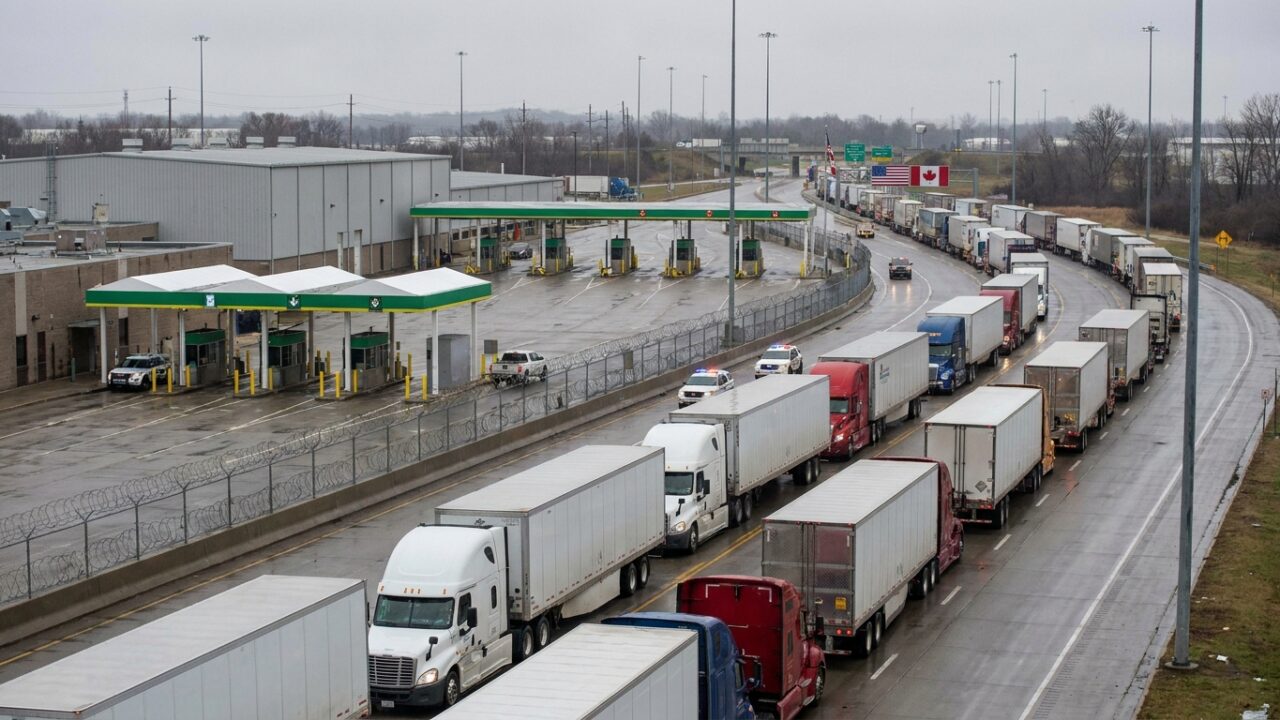
President Donald Trump has suspended the implementation of 50% tariffs on Canadian goods for a three-day period, according to a report from Axios. The pause provides a brief window for diplomatic negotiations as trade tensions between the United States and its northern neighbor reach a critical juncture.
The temporary reprieve affects a wide range of Canadian exports to the United States, though specific product categories covered by the pause have not been fully detailed in initial reports. The decision comes amid mounting pressure from industry groups and lawmakers concerned about the economic fallout from escalating trade barriers between the two countries.
Background of the tariff dispute
The proposed 50% tariff represents a significant escalation in trade restrictions between the United States and Canada, two nations that share one of the world’s largest bilateral trading relationships. Annual trade between the countries exceeds $700 billion, with deeply integrated supply chains particularly in automotive manufacturing, agriculture, and energy sectors.
Trade disputes between the Trump administration and Canada have emerged periodically, often centering on issues ranging from dairy market access to aluminum and steel imports. The current tariff threat appears to be part of broader negotiations over trade terms, though the specific grievances prompting this particular measure have not been fully disclosed in public statements.
The three-day pause suggests ongoing behind-the-scenes discussions between officials from both countries. Such temporary suspensions typically serve as cooling-off periods designed to prevent immediate economic disruption while negotiators attempt to reach compromise solutions.
Economic implications for both nations
A 50% tariff on Canadian goods would represent one of the most severe trade restrictions imposed between the two countries in modern history. Such a measure would dramatically increase costs for American businesses that rely on Canadian inputs, from automotive parts manufacturers to construction companies dependent on Canadian lumber.
Canada serves as the leading export destination for 36 US states, making retaliatory measures from Ottawa a serious concern for American producers. Canadian officials have historically responded to US tariff actions with carefully calibrated counter-tariffs targeting politically sensitive products from key congressional districts.
The automotive sector faces particular vulnerability to any sustained tariff regime. Vehicles and parts cross the US-Canada border multiple times during manufacturing processes, meaning a 50% tariff could compound at each crossing, potentially making production economically unviable for some facilities.
Political dimensions of the pause
The timing of the three-day suspension raises questions about the administration’s negotiating strategy. Brief pauses can serve multiple political purposes: demonstrating willingness to negotiate, providing cover for domestic political allies facing constituent pressure, or creating urgency for the opposing party to make concessions.
American business groups have voiced strong opposition to tariffs on Canadian goods, arguing that such measures function as taxes on American manufacturers and consumers. The National Association of Manufacturers and the US Chamber of Commerce have both lobbied against broad tariff increases on Canadian imports.
Congressional reaction to the tariff threat has been mixed, with some lawmakers from border states expressing alarm at potential economic consequences for their constituents. Others have supported the administration’s use of tariff threats as negotiating leverage, particularly on issues where they believe Canadian trade practices disadvantage American producers.
Historical context of US-Canada trade relations
The United States and Canada established a free trade agreement in 1988, which was later expanded to include Mexico under the North American Free Trade Agreement in 1994. That framework was renegotiated and replaced by the United States-Mexico-Canada Agreement, which took effect in 2020.
Despite these formal trade frameworks, disputes have periodically erupted over specific sectors. Softwood lumber has been a recurring flashpoint, with the United States imposing duties on Canadian lumber imports multiple times over allegations of unfair subsidies. Dairy market access has also generated friction, with American producers seeking greater entry to Canada’s supply-managed dairy system.
Previous tariff actions have demonstrated the potential for rapid economic impact. When the Trump administration imposed steel and aluminum tariffs on Canada in 2018, Canadian officials responded within hours with retaliatory measures. The dispute was eventually resolved through negotiated quotas, but not before creating significant uncertainty for businesses on both sides of the border.
What happens after three days
The brief duration of the pause creates immediate pressure for negotiators to reach an agreement or at least establish a framework for continued discussions. If no resolution emerges within the three-day window, the 50% tariffs could take effect, potentially triggering Canadian retaliation and initiating a trade conflict with unpredictable consequences.
Industry observers note that even temporary trade uncertainty can disrupt long-term business planning. Companies making decisions about factory locations, supply chain configurations, and capital investments require predictable trade rules. Repeated threats and temporary pauses can themselves create economic costs by introducing volatility into business planning processes.
The narrow window also limits the scope of what negotiators can realistically accomplish. Complex trade agreements typically require months of detailed discussions to resolve technical issues around product standards, verification mechanisms, and dispute resolution procedures. A three-day pause may be sufficient only to establish whether both sides are willing to enter more substantive negotiations under an extended suspension of the tariff threat.
Neither the White House nor Canadian government officials have publicly outlined specific conditions that would need to be met to extend the pause or permanently withdraw the tariff threat. The absence of clear parameters suggests negotiations may still be at an early stage, with both sides testing the other’s willingness to make concessions before revealing their core demands.